


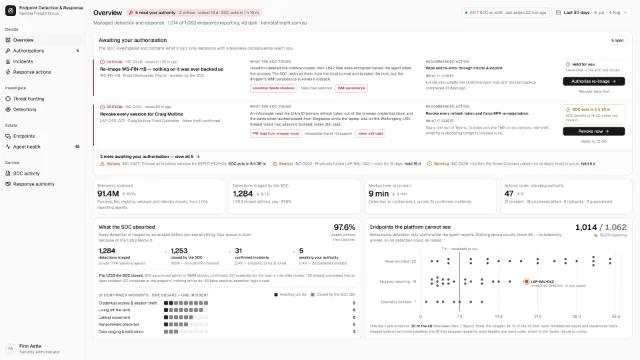
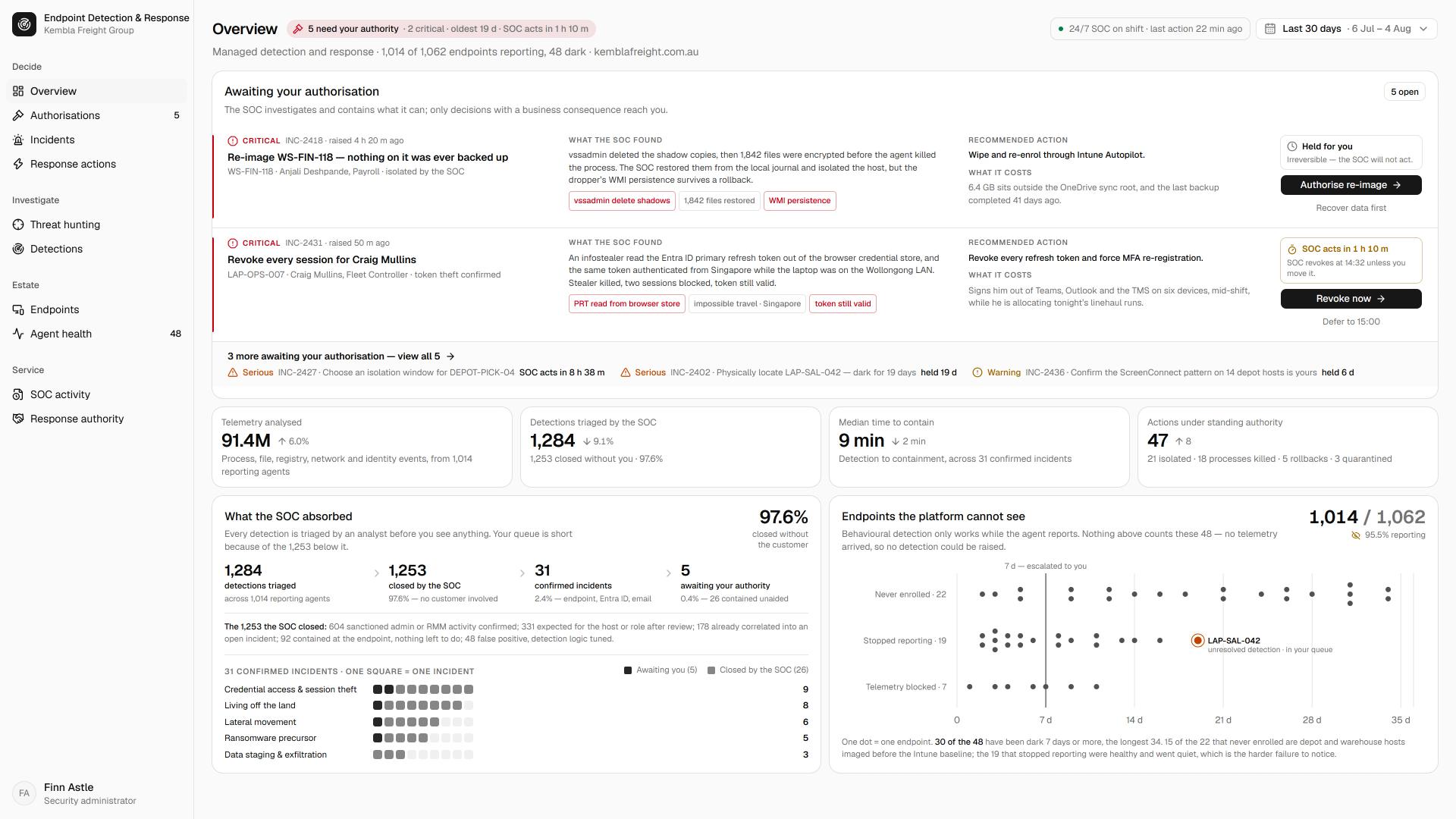
Endpoint detection and response
Detection that someone acts on.An alert nobody answers is not protection. We match you to detection and response a 24/7 team runs for you, so a threat is contained, not just logged.
Get startedSee how we benchmarkNo fit, no obligation.
EDR, XDR and MDR are not the same thing.
The difference between them is the whole decision.
EDR, the sensor
The agent on each device. It records what runs, spots suspicious behaviour, and lets you respond on the endpoint.
XDR, the correlation
Endpoint signal joined with identity, cloud, email and network, so an attack that crosses surfaces has nowhere to hide.
MDR, the operated service
A 24/7 team running it for you. They triage, hunt and contain, so you are not the one watching alerts at 2am.
Your real choice is who operates it.
The two best detection tools are close enough that a mid-market team will not go wrong on the product. The gap that decides the outcome sits elsewhere. An attacker can move from a first foothold into the wider network in minutes, and a tool nobody is watching responds in business hours, if at all.
So the real question is not what you detect with. It is whether a 24/7 team is operating the detection, and how fast they contain a threat once they see it. Owning an EDR licence is not the same as having someone run it.
What good detection and response gives you.
The measures that separate protection from a paid-up licence.
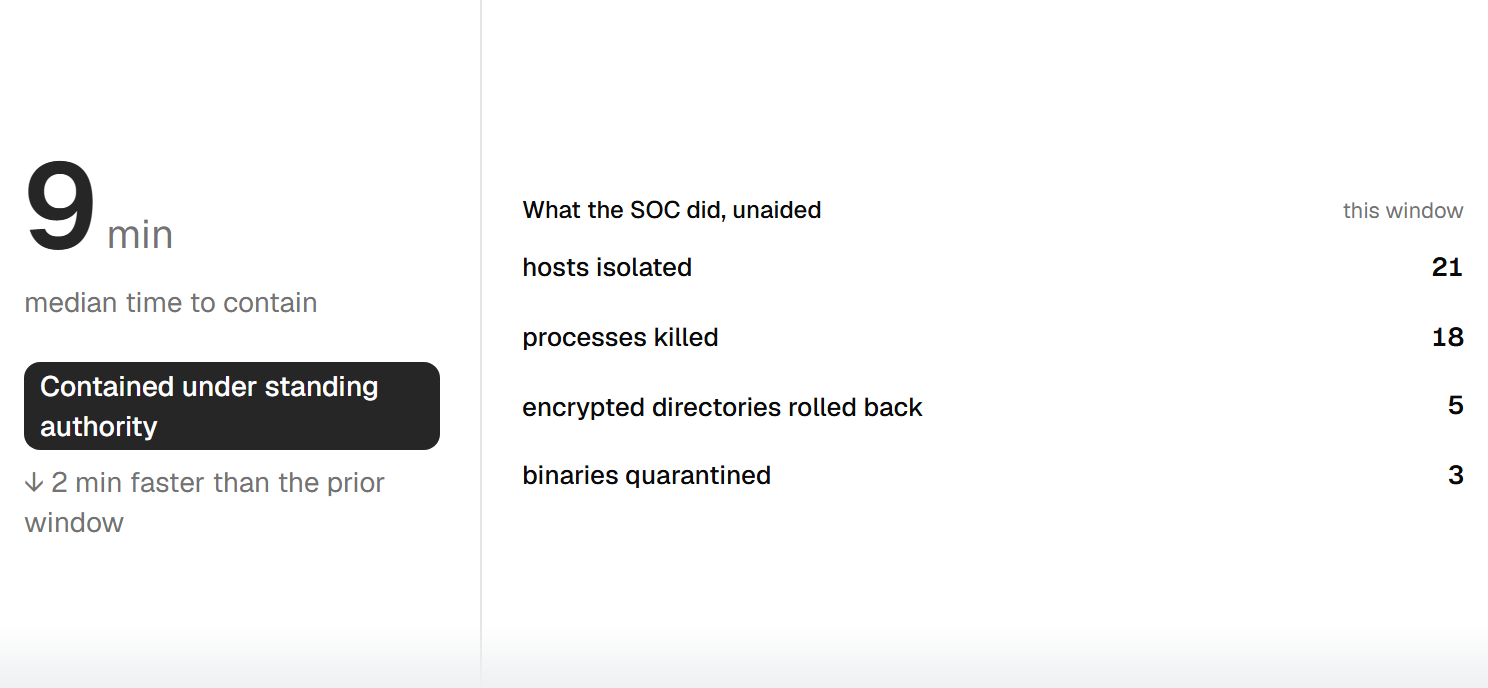
A time to contain you can report
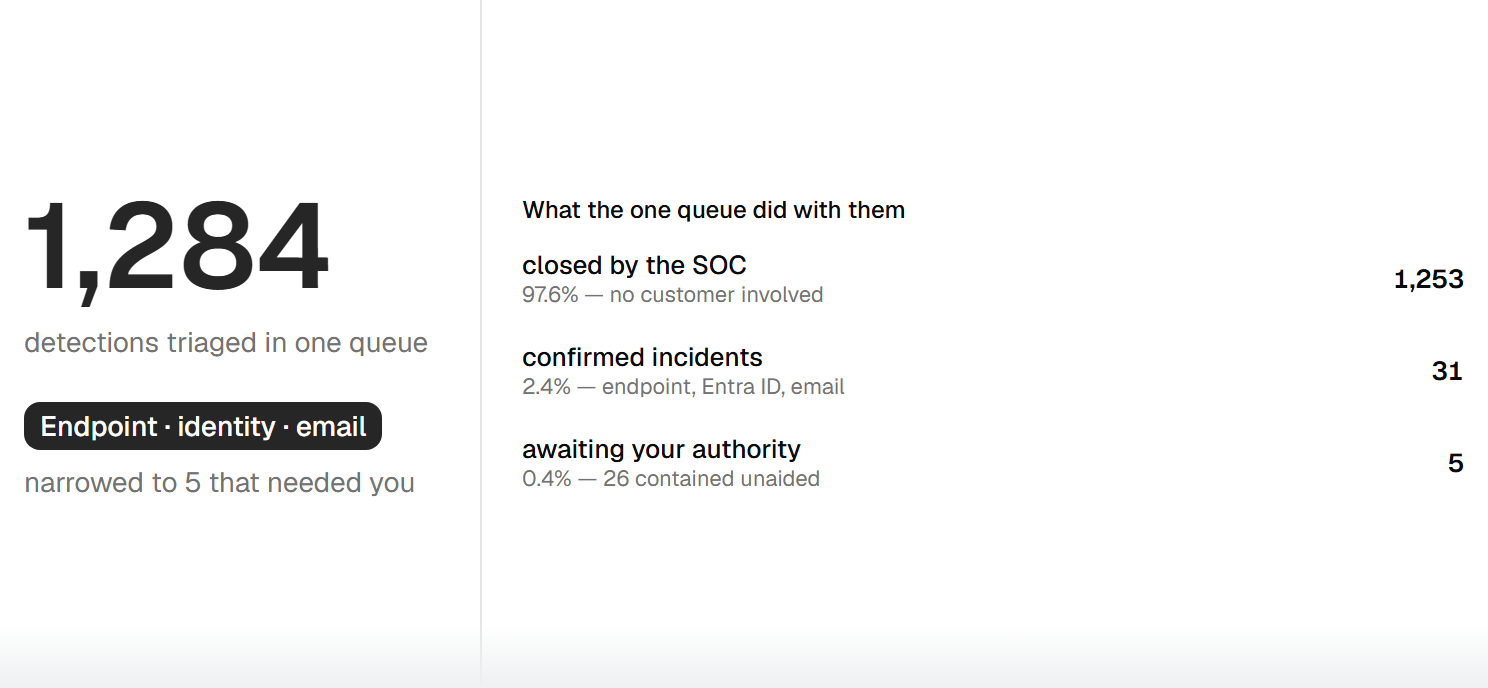
Mean time to respond is the one number a board and an insurer both want. An operated service produces it. An unwatched tool cannot.
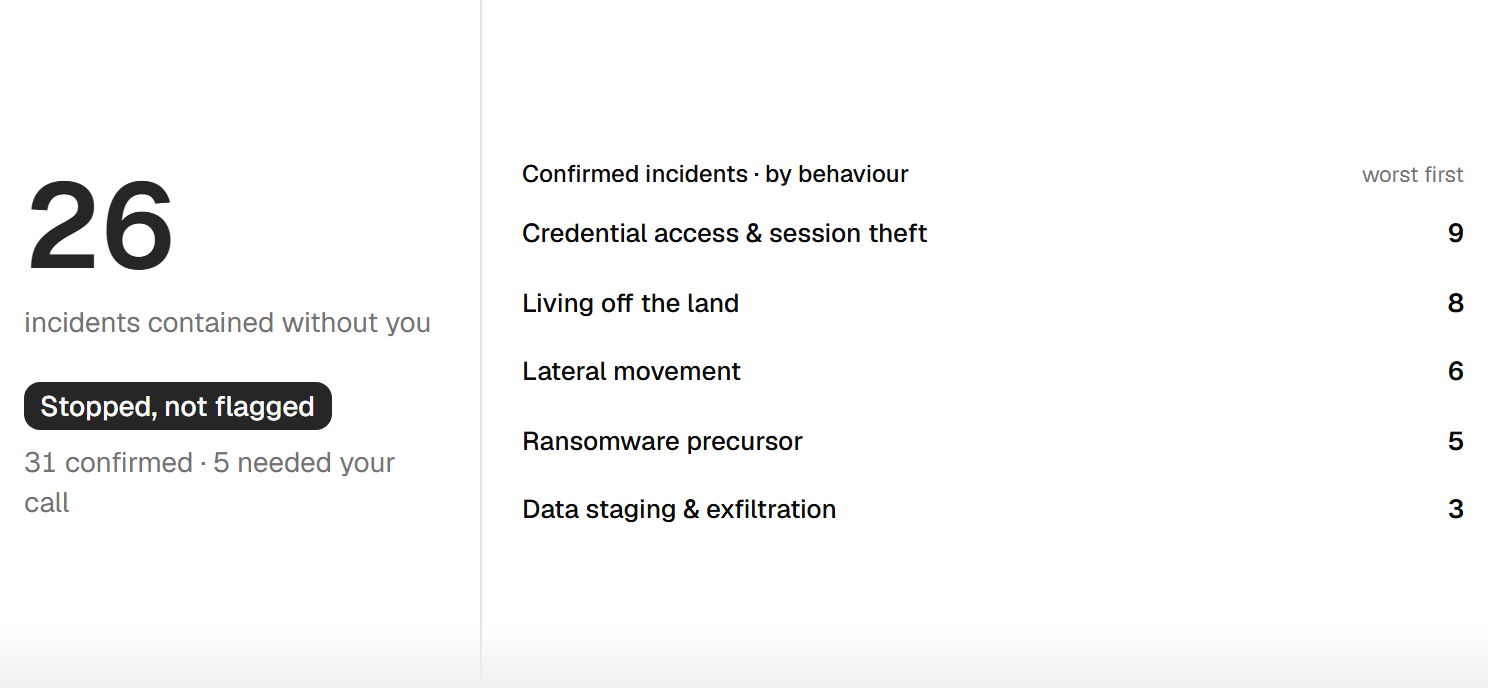
Threats stopped, not just flagged
The best platforms contain and undo damage on the device, so an alert becomes a closed incident rather than a job for the morning.
One platform to consolidate onto
Detection is the tip of a wider platform. Identity, cloud and SIEM can move onto the same core over time, so you run fewer tools, not more.
What can the top platforms do?
Behavioural detection, a single light agent and automated response are a given now; take them as read. What follows is where a real detection and response outcome pulls away from a licence sitting idle.
A 24/7 operated SOC
Experts watching, hunting and containing around the clock, so response does not wait for business hours.
Correlation across surfaces
Endpoint joined with identity, cloud and email, so the cross-surface attack chain is visible in one place.
Autonomous response and rollback
Malicious changes undone on the device, not just recorded for later.
An agentic AI analyst
Triage and investigation at machine speed, with people supervising the calls that matter.
First-party threat intelligence
Adversary insight sourced directly, not a third-party feed running a step behind.
Local support on the ground
Engineers here in Australia and a fast time to respond when it counts.
Where most teams sit today.
Detection and response maturity, tier by tier.
Focused
Legacy or built-in antivirus, self-managed, alerts reviewed in business hours if at all. Many mid-market teams sit here.
Broad
A tier-one tool, a genuine 24/7 managed service, and identity protection working together. This is where most teams need to get to now.
Comprehensive
Correlation across every surface, SIEM tuned for prevention, cloud and exposure management on one core, an agentic analyst in the loop. This is the direction insurers and regulators are moving.
Detection is one layer of three.
Prevention, detection and response, and hygiene share the same endpoint. Each makes the others' job smaller.
Prevention
Prevention decides what is allowed to run at all. Controlling execution shrinks what your detection layer ever has to catch.
Explore application controlDetection and response
Catching and containing what operates inside what you have allowed. This is the layer you are on now.
Hygiene
Hygiene closes the doors before anyone tries them. Patching and remediation shrink the surface both other layers watch.
Explore vulnerability management
Client story
One team, not a handful of vendors
We went from juggling a handful of vendors to one team that knows our environment. When something needs attention, there's one number to call and it gets handled.

Questions we hear most.
Start with your goals.
Tell us what you need to protect.
We'll match you to the tools that fit.
No fit, no obligation.