


Vulnerability management and patching
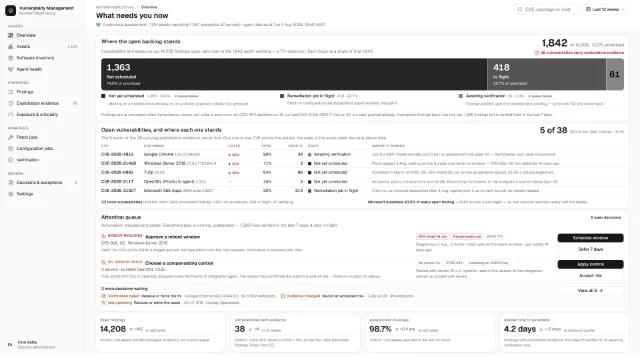
Fix what attackers can actually reach.Finding vulnerabilities is the easy part. We match you to tools that fix what is actually exploitable in your environment, and prove it is gone.
Get startedSee how we benchmarkNo fit, no obligation.
Four problems, not one product.
Every vulnerability program wrestles with the same four. Name yours before you shop for a tool.
Seeing what you have
A static scanner takes a snapshot every few hours. Between scans, and across every device you did not know was there, you are blind.
Knowing what matters
A scan returns thousands of findings. Working out which handful can actually hurt you is the labour that eats the week.
Too many tools for one job
A scanner here, a patching tool there, a separate operating-system patcher. Three consoles to do what should be one job.
The gap with no patch
Sometimes there is a known vulnerability and no fix available. Ignoring it is not an option, and neither is waiting.
Finding gaps is easy. Closing them is the work.
Finding vulnerabilities is commoditised. Every scanner on the market returns a long list, and the length of that list is not your risk. The value sits in closing the gaps that matter and proving them gone, which is the part most tools leave to you.
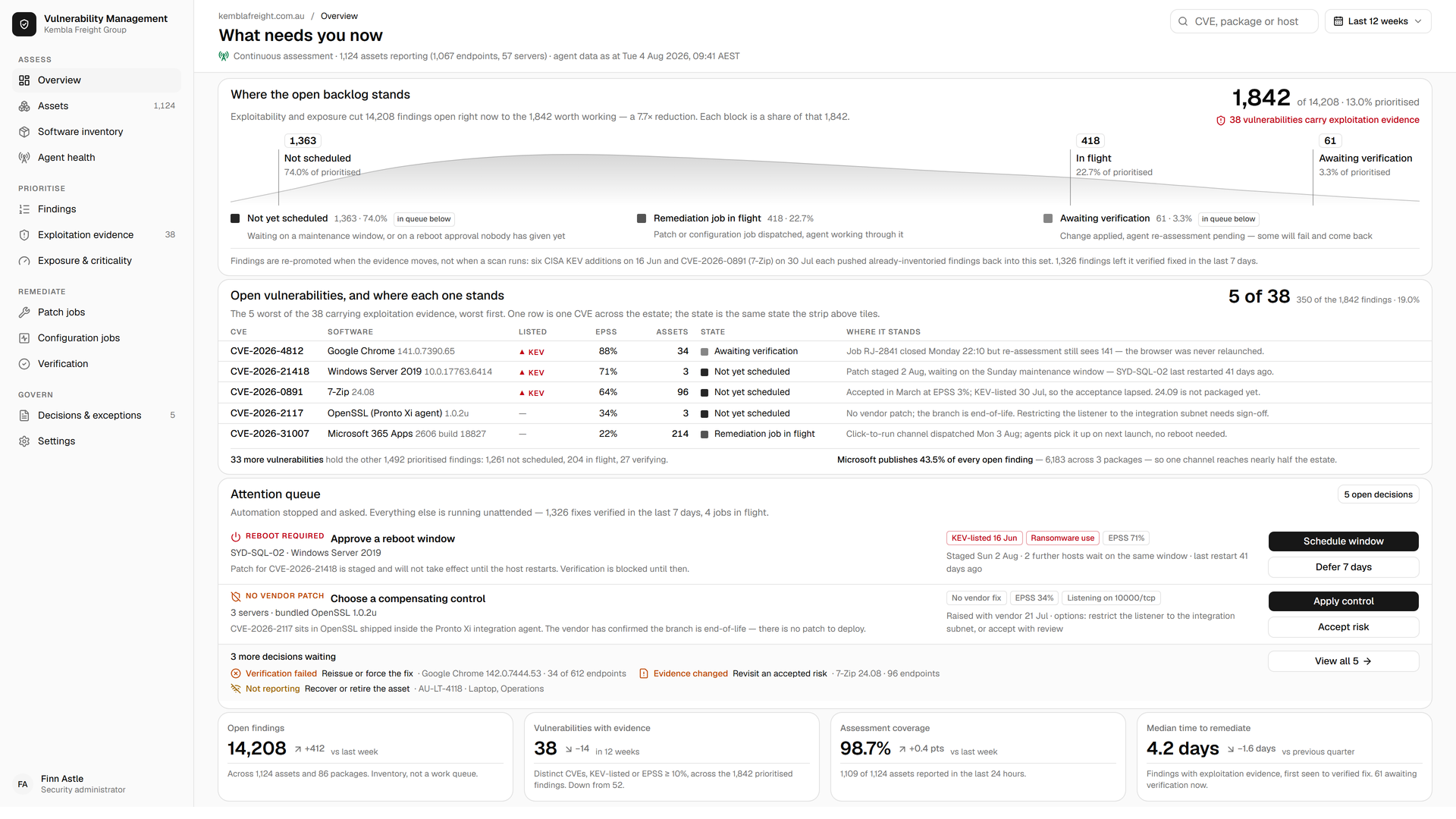
Which gaps matter depends on your environment, not a published score. A vulnerability rated critical on paper might be a five in your network, and a low-rated one might escalate because it is internet-facing and already being exploited. Good prioritisation re-rates every finding against the 20 to 30 things that are true only of your environment, so your team spends the week on the few that count.
What good vulnerability management gives you.
What closing gaps looks like, past the length of a report.
Effort spent where the risk is
Prioritisation by exploitability in your environment, not raw CVE counts, so your team fixes the few findings that can actually be used against you.
Gaps closed and proven gone
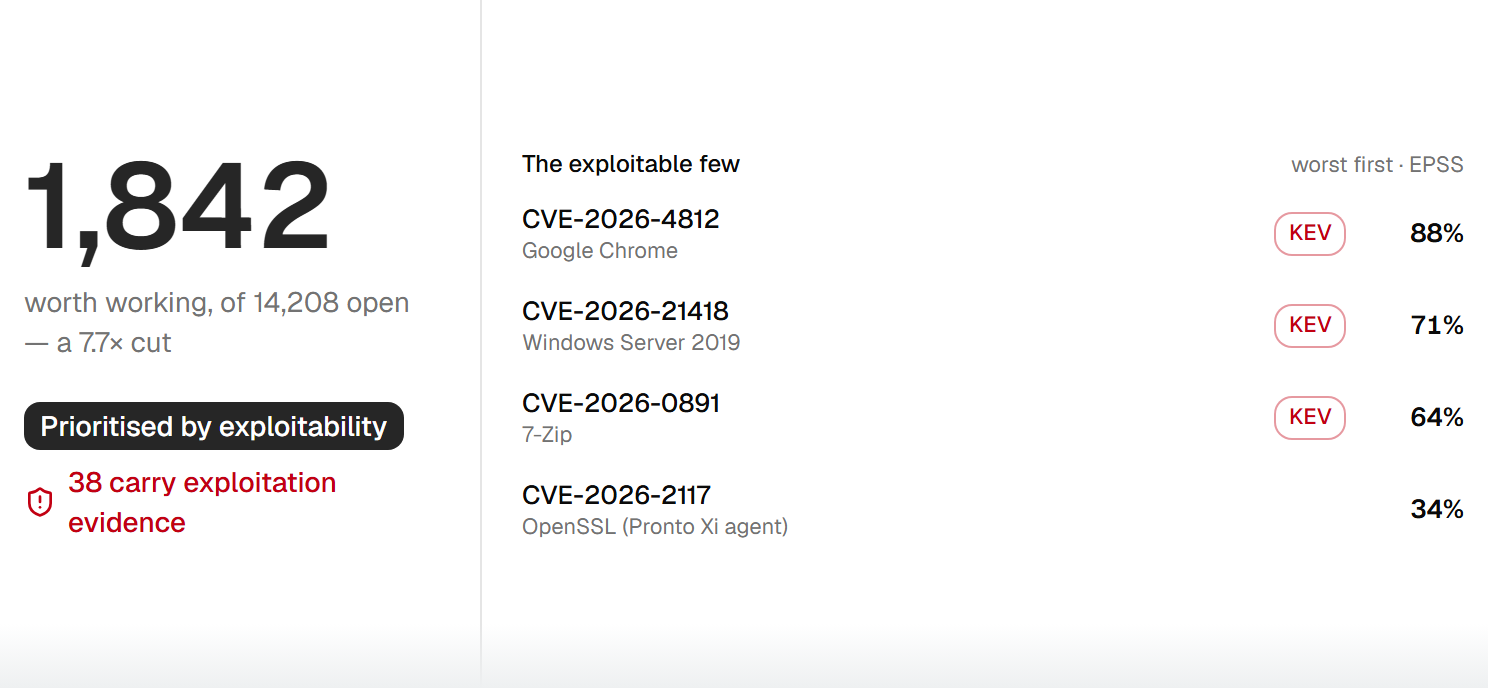
Real remediation, not another report. The fix is applied, validated, and shown closed, so you can evidence it to an auditor or an insurer.
An answer for the un-patchable
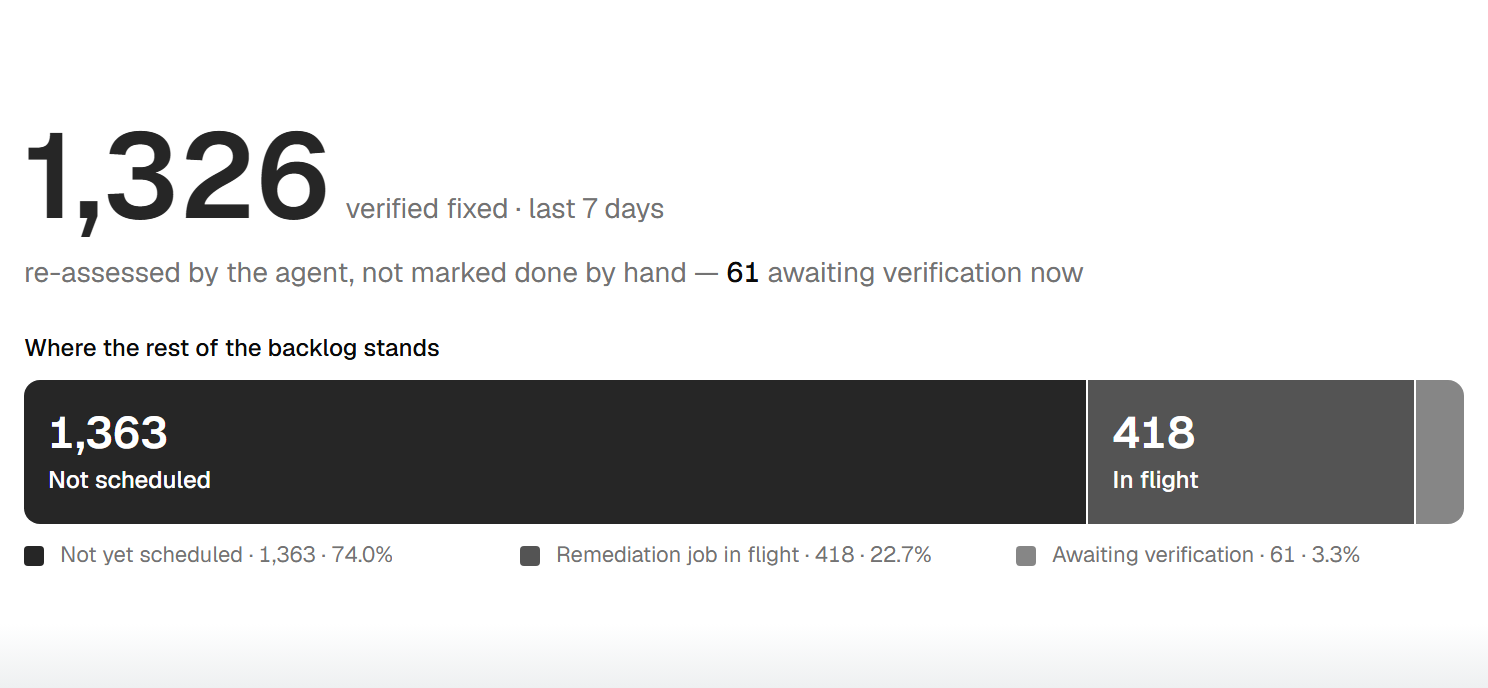
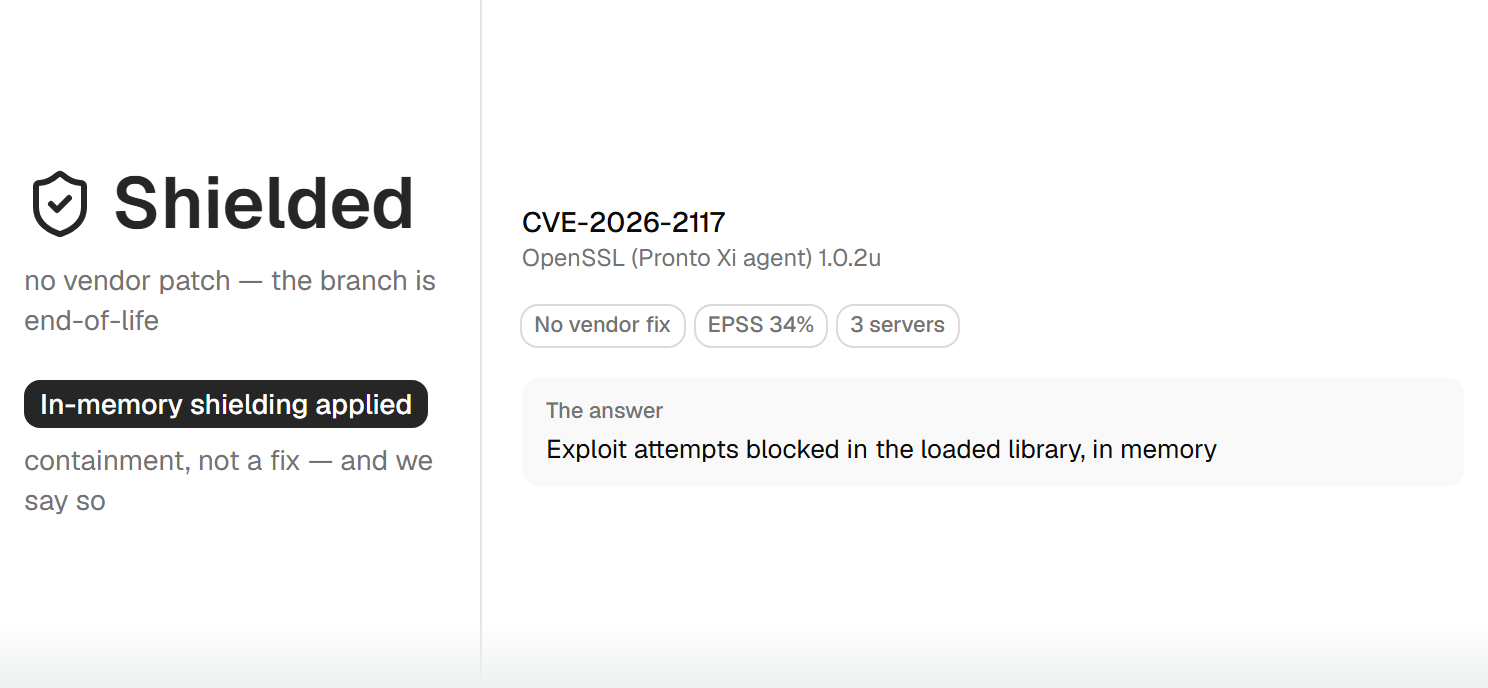
When there is no patch, in-memory shielding reduces the risk in place. It improves the position, it does not replace it, and we are clear about the difference.
What can the top platforms do?
Scanning, a CVE feed and a patch button come with everything now. The list below is what separates a program that closes gaps from one that only counts them.
Risk-based prioritisation
The published score plus the data points unique to your environment, re-rating each finding up or down so the queue reflects real exposure.
Real remediation, not just scanning
Patching and deployment built in, so finding a gap and closing it happen in one place rather than three.
Third-party and operating-system patching together
The applications attackers actually target, not just the operating system your existing tooling already covers.
Patchless protection for the un-patchable
In-memory shielding for the vulnerability with no fix available, described honestly as risk reduction, not a cure.
Remediation validation
Proof a gap is closed rather than an assumption, so your compliance evidence rests on a re-test, not a tick box.
Ring and phased deployment
Patches rolled out in controlled waves with exclusion windows, so a fix never takes down the business it was meant to protect.
The backlog is usually bigger than the team.
Vulnerability management maturity, tier by tier.
Focused
A scanner run periodically, findings triaged by hand, patching left to the RMM or to whoever has time. The list grows faster than the team can work it. Many mid-market teams sit here.
Broad
Risk-based prioritisation, remediation and third-party patching working as one program, with the Essential Eight patch controls met as a matter of routine. This is where most teams need to get to now.
Comprehensive
Prioritisation tuned to your environment, patchless shielding for the un-patchable, remediation validated and evidenced, patching automated as far as it honestly can be. The level insurers and auditors are trending toward.
Hygiene is one layer of three.
Prevention, detection and response, and hygiene share the same endpoint. Each makes the others' job smaller.
Prevention
Prevention decides what is allowed to run at all. Controlling execution shrinks what could ever exploit a gap.
Explore application controlDetection and response
Catching and containing what operates inside what you have allowed, when something gets through.
Explore detection and responseHygiene
Closing the doors before anyone tries them. Patching and remediation shrink the surface the other two layers watch. This is the layer you are on now.
Client story
From framework obligation to controls in place
Application control and patching are the two controls everyone finds hardest. Tekspace made them something we actually run, not just something we report on.

Questions we hear most.
Start with your goals.
Tell us what you need to protect.
We'll match you to the tools that fit.
No fit, no obligation.