


Password and credential management
The vault is only the start.A vault fixes passwords for your people. The bigger risk sits behind them, in shared admin logins, secrets in your code, and the machines and AI agents nobody is watching. We match you to a platform that covers the lot.
Get startedSee how we benchmarkNo fit, no obligation.
Passwords are the smallest part of this.
A password manager for staff is the sensible place to start, and most teams never get past it. But the vault is the on-ramp, not the destination. The real question is bigger: who and what can log into your systems, and can you prove it. That includes your people, the shared admin accounts your IT team passes around, the API keys and secrets sitting in your code, and now the bots and AI agents that hold credentials of their own.
Credentials are the currency of intrusions. Phishing and infostealer malware harvest them, then attackers reuse them, move sideways and escalate. Vulnerability exploitation edged past credential abuse as the most common way in during 2026, but stolen and misused credentials still turn up in around two in five breaches, which keeps them the most pervasive thread running through the whole attack.
MFA protects the login. It stops there.
Three gaps a login prompt was never built to close.
Stolen sessions
Adversary-in-the-middle kits lift the session token after MFA and walk straight in, and infostealers harvest session cookies that skip the prompt entirely. MFA guards the door, not the keys taken once someone is through it.
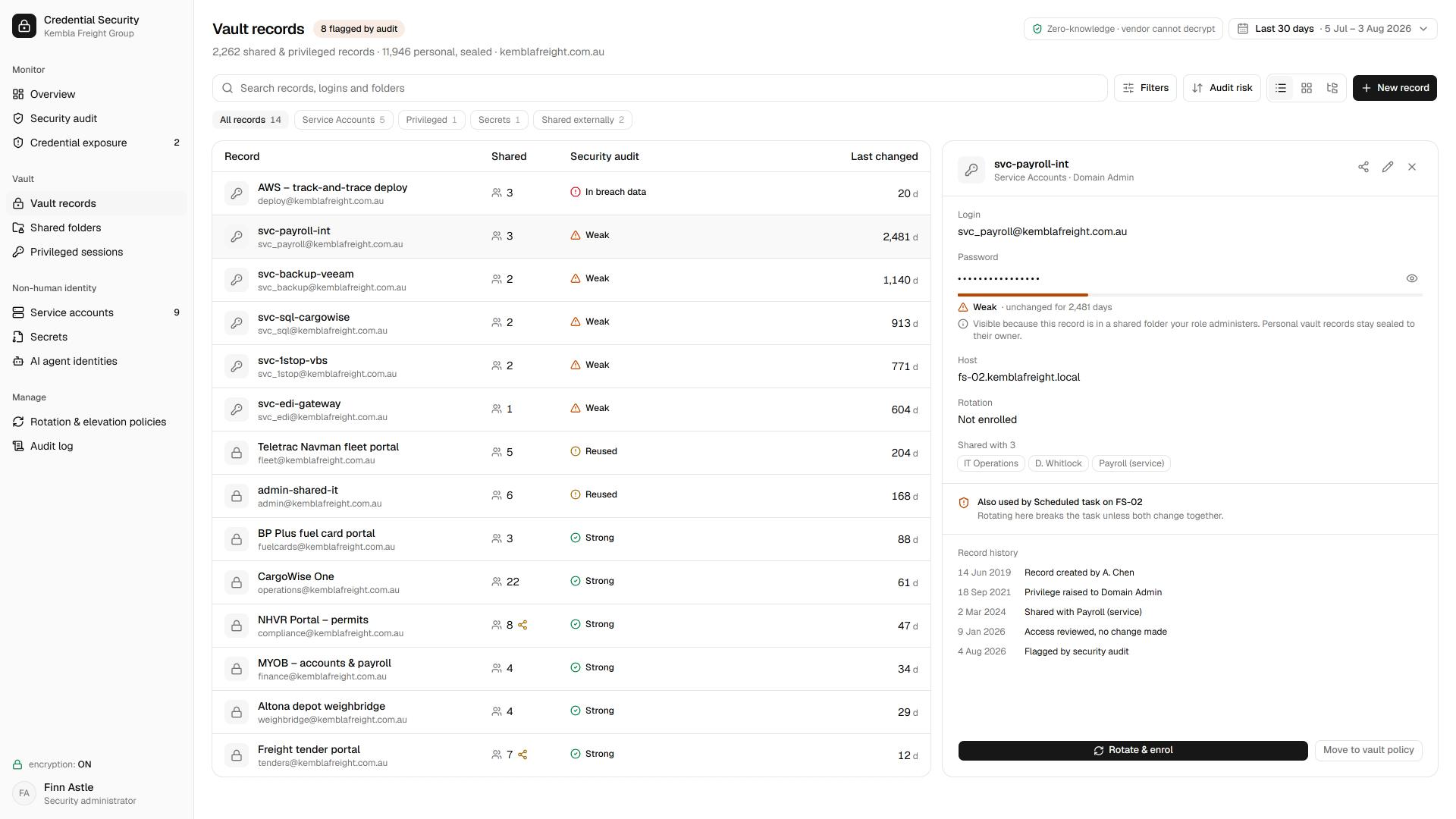
Standing admin access
The shared domain admin password, and the service accounts nobody rotates. This is the credential an attacker wants most, and MFA does nothing to control who uses it or when.
Secrets and machines
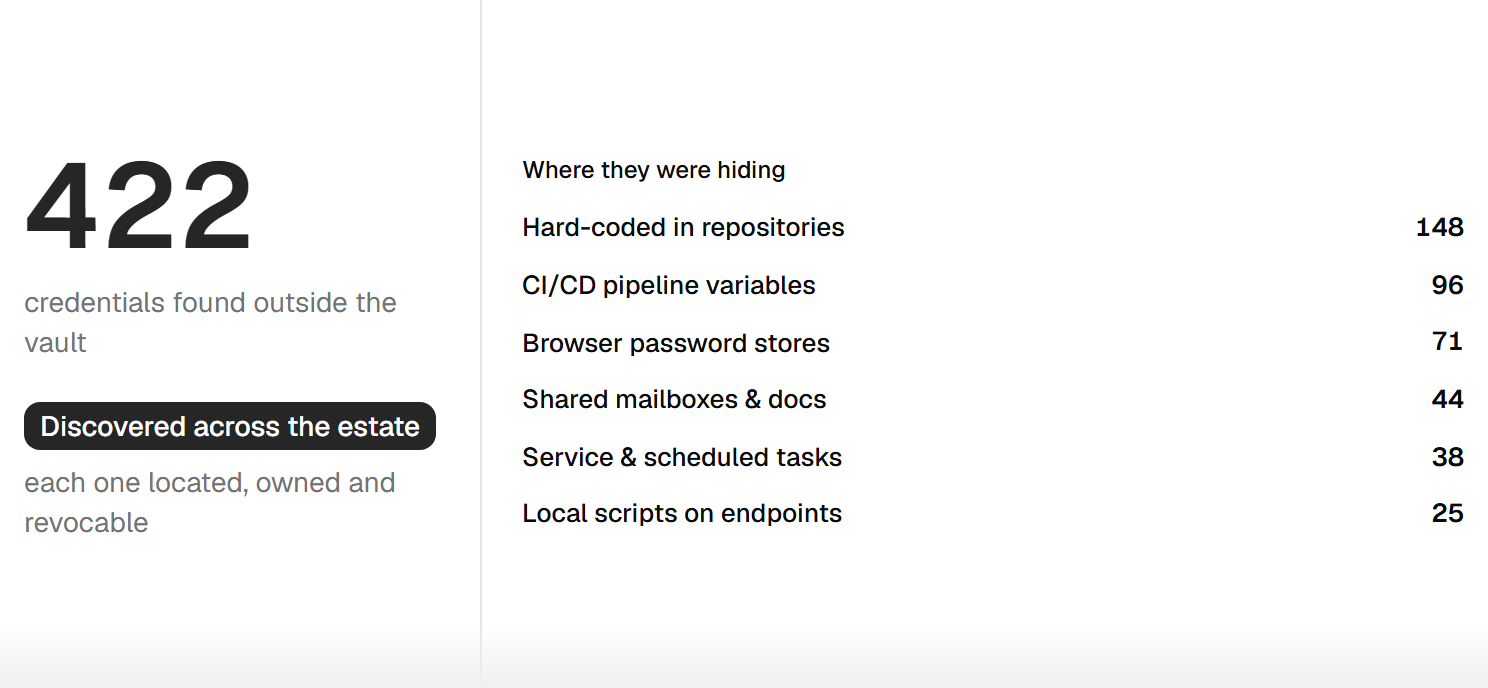
API keys hard-coded in your repositories, secrets in your pipelines, and the machines and AI agents that authenticate with no person present. None of it ever sees a login prompt.
Architecture is what you're actually choosing.
Every vendor in this category will tell you they are secure. The question that separates them is one you can put to any of them: can you read my vault. A zero-knowledge platform mathematically cannot. Your data is encrypted and decrypted on your side, so a breach of the vendor yields ciphertext and nothing else. A vendor that cannot cleanly explain why they are unable to read your vault has answered the most important question badly.
This is the lesson the market took from the LastPass breaches, and it is testable two ways. Ask the vendor to prove their encryption model. And check your own exposure: how many of your domains and users already sit in breach and infostealer data. You are not choosing on a feature sheet. You are choosing on architecture and on your own data.
What good credential management gives you.
What real coverage looks like past the vault.
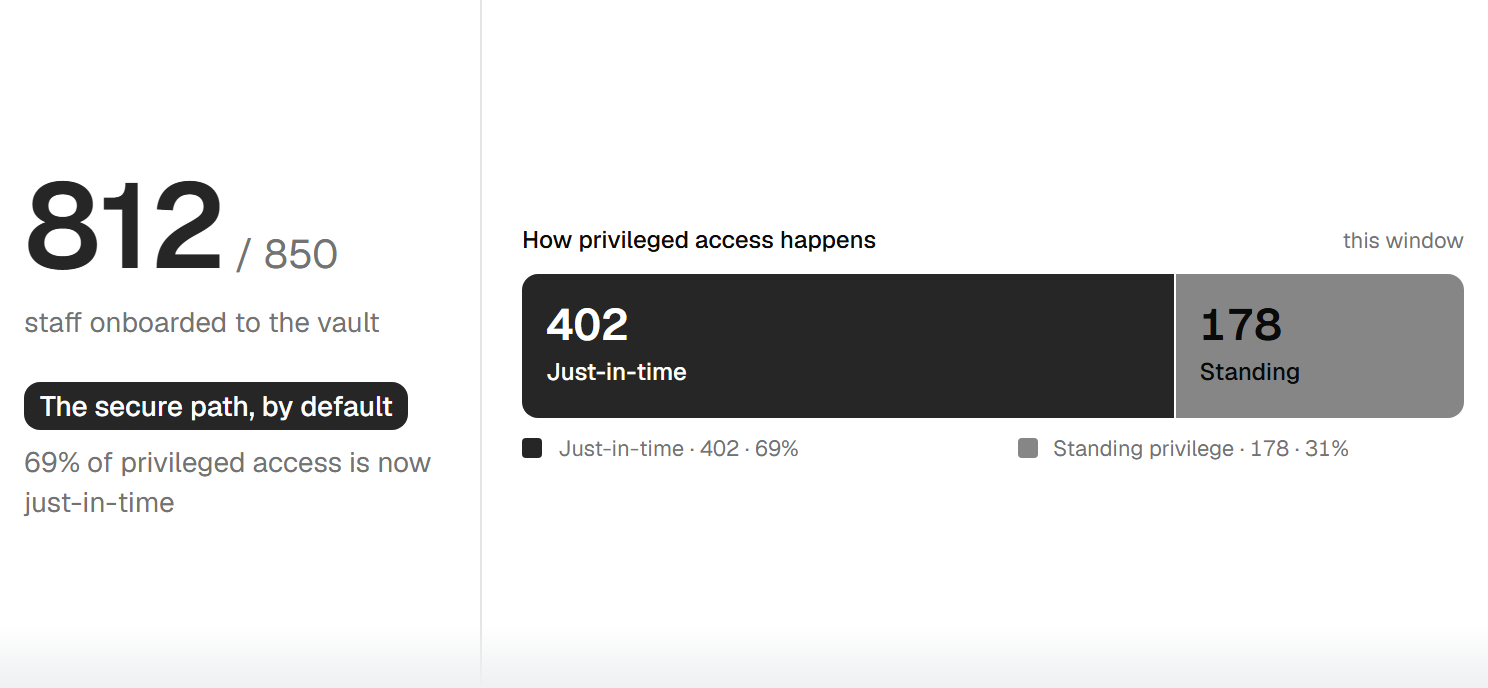
The secure path becomes the easy path
Generated, unique passwords your people never have to remember or reuse, filled only on the right site. The safe choice stops depending on anyone's willpower.
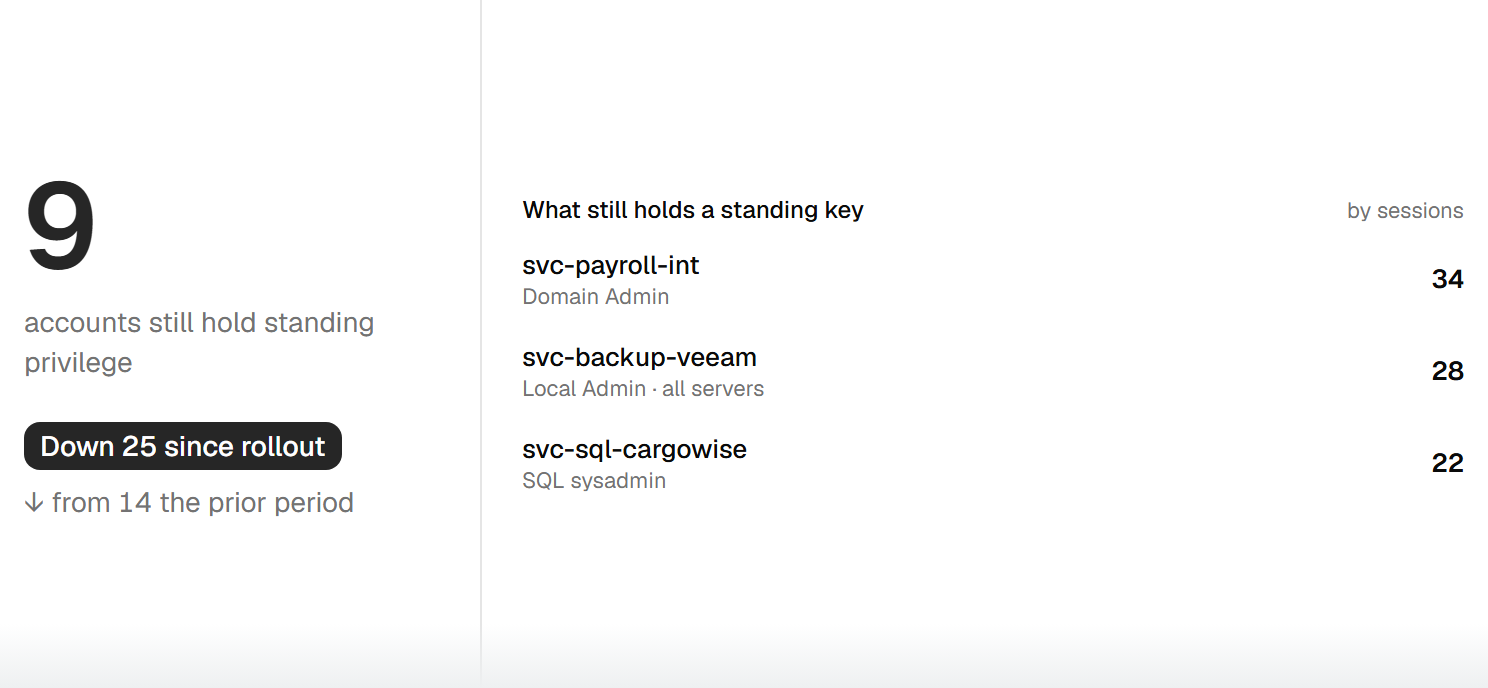
Standing risk under control
Shared admin passwords and privileged accounts brought under just-in-time access, session control and automatic rotation, so no one holds more than they need for longer than they need it.
An audit trail you can show
One view of who and what can access what, with one-click removal when someone leaves. It is how you actually evidence the two credential controls in the Essential Eight: multi-factor authentication and restrict administrative privileges.
What can the top platforms do?
A vault, a generator, autofill and MFA on the vault are the price of entry now. These are the capabilities that decide how much of your real risk actually gets covered.
Zero-knowledge architecture
Your vault is encrypted and decrypted on your side, so the provider cannot read it and a breach of them yields nothing usable.
Privileged access management in the same platform
Shared admin credentials brought under just-in-time elevation, session control and automatic rotation, without a heavyweight legacy project.
Secrets management for code and pipelines
Secrets pulled from a vault at runtime instead of hard-coded, then rotated automatically, so a leaked repository does not hand over the keys.
Passkey custody
The vault holds and manages passkeys, which are phishing-resistant by design, keeping it relevant as passwords decline.
Machine and AI-agent identity
Scoped, short-lived, revocable credentials for the bots and agents that authenticate with no person present, under the same policy and audit as human logins.
Independent certification
FedRAMP High and FIPS 140-3 validation separate enterprise-grade platforms from consumer-heritage tools, which matters for regulated and cyber-insured buyers.
Most teams stop at the vault.
Credential maturity, tier by tier.
Focused
A password vault for your people. Unique generated passwords, autofill, secure sharing, MFA on the vault. This solves credential hygiene for humans, and it is the on-ramp. Most teams that have done anything at all sit here.
Broad
The vault plus privileged access. Shared admin credentials brought under control, with just-in-time elevation, session control, automatic rotation and central audit. This is where your biggest standing risk actually lives, and where most teams need to get to now.
Comprehensive
One control plane over human, privileged, machine and AI-agent credentials. Passwords, passkeys, privileged access, secrets management and non-human identity under a single zero-knowledge policy engine. The direction audit and insurance requirements are moving.
Client story
Every credential in one place, shared safely
Passwords used to live in too many heads and too many spreadsheets. Now they are in one place we trust, and sharing one safely is finally simple.
Questions we hear most.
Start with your goals.
Tell us what you need to protect.
We'll match you to the tools that fit.
No fit, no obligation.